Industrial Label Solutions

Identification Labels for Equipment and Industrial Packs

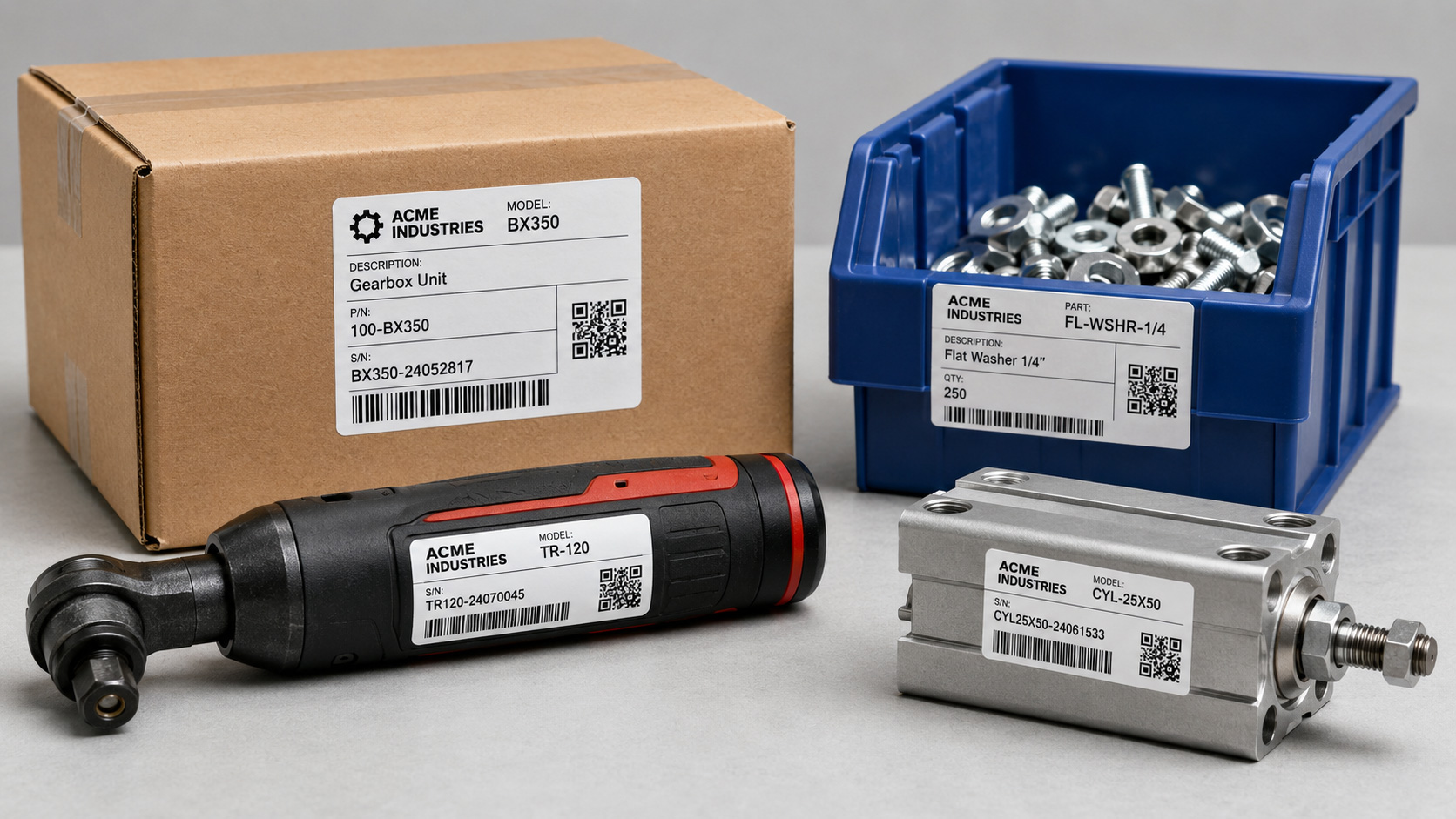
Plan readable identification for tools, machinery, electronics and technical packaging. Define the surface and operating conditions before choosing the label construction.

Keep product identification usable

Industrial labels often carry information that must remain accessible through storage, transport and use. Abrasion, heat, moisture and surface texture all influence whether a label is suitable.

Discuss equipment identifiers, warning layouts, serial labels and carton markings with Labelnivo. Clear specifications help connect the artwork, material and data requirements for the project.

Industrial Label Programs

Three ways to scope your industrial labels

Essential

Everyday industrial labels

Start with the essentials: a readable design, a suitable adhesive and a size that fits equipment panels, tools, components, containers and cartons.

  • Polyester, synthetic or coated-paper stock
  • Monochrome or color technical artwork
  • Clearly organized identifiers and scan fields
  • Order quantity and timing confirmed by project
Distinctive

A distinctive industrial finish

Explore a more tactile or decorative direction using protective lamination, matte surfaces and selected printed details. Confirm the combination against your artwork and budget.

  • Polyester and vinyl constructions to evaluate
  • Surface appearances matched to the equipment
  • Protective layers assessed for rubbing and wear
  • Adhesive and exposure limits confirmed by testing
Collection

A coordinated industrial range

Build related labels for equipment panels, tools, components, containers and cartons. Define the common design elements alongside the text, codes and dimensions that change by variant.

  • Related equipment and component identification
  • Approved warnings and shipping identifiers
  • Data fields for identification and record lookup
  • Consistent artwork rules across equipment models

Packaging examples

Label formats for equipment panels, tools, components, containers and cartons

Industrial label material

Select your material and finish

Match the label to its conditions

Material options to discuss include PET, vinyl, reflective stock or tamper-evident film. Compare protective lamination, matte surfaces and selected printed details using a proof or sample where needed.

For this application, review surface texture, temperature range, abrasion, moisture and chemical exposure. These details guide the sample specification and any performance checks.

Silver PET labels High-tack adhesive Scratch-resistant lamination Void labels Reflective labels Shape and size to suit your pack

Industrial Label Information

Prepare clear, approved label content

Supply approved model references, ratings, warnings, instructions and any approved compliance marks. Labelnivo uses the confirmed artwork as the basis for the print discussion; content approval remains with the brand.

Technical information and compliance marks must come from approved product documentation. A printed label does not by itself establish that equipment meets a required standard.

whatsapp

Plan your industrial labels with
Labelnivo

Project coordination

A specification built around your packaging and artwork requirements.

Coordinated packaging details

Define the labels and related packaging elements together so dimensions, design and ordering requirements can be checked as one project.

Artwork Review

Agree the proof, reference sample and inspection requirements for your order.

Project scheduling

Discuss your launch date so feasibility and production timing can be checked.

Delivery Planning

Include the delivery destination and purchasing requirements in your project brief.

Packaging Support

Discuss surface texture, temperature range, abrasion, moisture and chemical exposure before choosing the material and adhesive.

Process

Planning Your Order

Send a product photo or artwork together with your dimensions, quantity and intended packaging use.

Review the container surface, artwork, material, finish and application method to define the project requirements.

Check the proposed specifications, quantities, design work and delivery costs against your quotation before proceeding.

Review the layout, spelling, color references and fit. Confirm any proof or sample arrangements before approving the artwork.

Confirm the approved specifications, order terms and production schedule together. Keep the final reference files for future repeat orders.

Agree the shipping method, destination and estimated transit time, then confirm packing and delivery details for the order.

FAQ

Industrial label planning questions

List the surface material, label size, viewing position and operating conditions. Include the approved technical content and any service-life requirements for review.

Nameplates organize identification and rating details; warning labels prioritize specific safety information. Supply the approved content for each and confirm how it should be presented.

Define sunlight, temperature, moisture and abrasion exposure, plus the surface finish. Test the proposed label construction under representative conditions before approval.

Provide a structured data file and an example of the required layout. Confirm numbering rules, code format and scan checks before the production data is prepared.

Discuss your industrial labels

Send Labelnivo a product photo, approximate dimensions and your intended quantity. We will use those details to discuss the artwork, material and quotation scope.